Reviews
Part of An outdoor living contractor: checks matter more than a good first impression
Does an outdoor living contractor actually prove products before installing them?
What outdoor living contractors should verify before they specify: how a good contractor proves a product suits your site, test standards, listings, field mock-ups.
Homeowners test products by buying them, but contractors are supposed to test them first. That is most of what you pay a specifier for, and the questions below reveal whether a firm has a method or a preferred supplier.
They work without any technical knowledge on your part. A firm that tests products before installing should also explain what it hands over for care and upkeep at the end of the job.
What to take away
- Ask what standard a claim is tested against, then ask whether the test matches your conditions.
- A field mock-up settles arguments that specification sheets cannot.
- Risk data should shape material choices in exposed regions, not marketing copy.
- Decorative flame is the item where clients push hardest and the guidance is clearest.
Five questions that expose the method
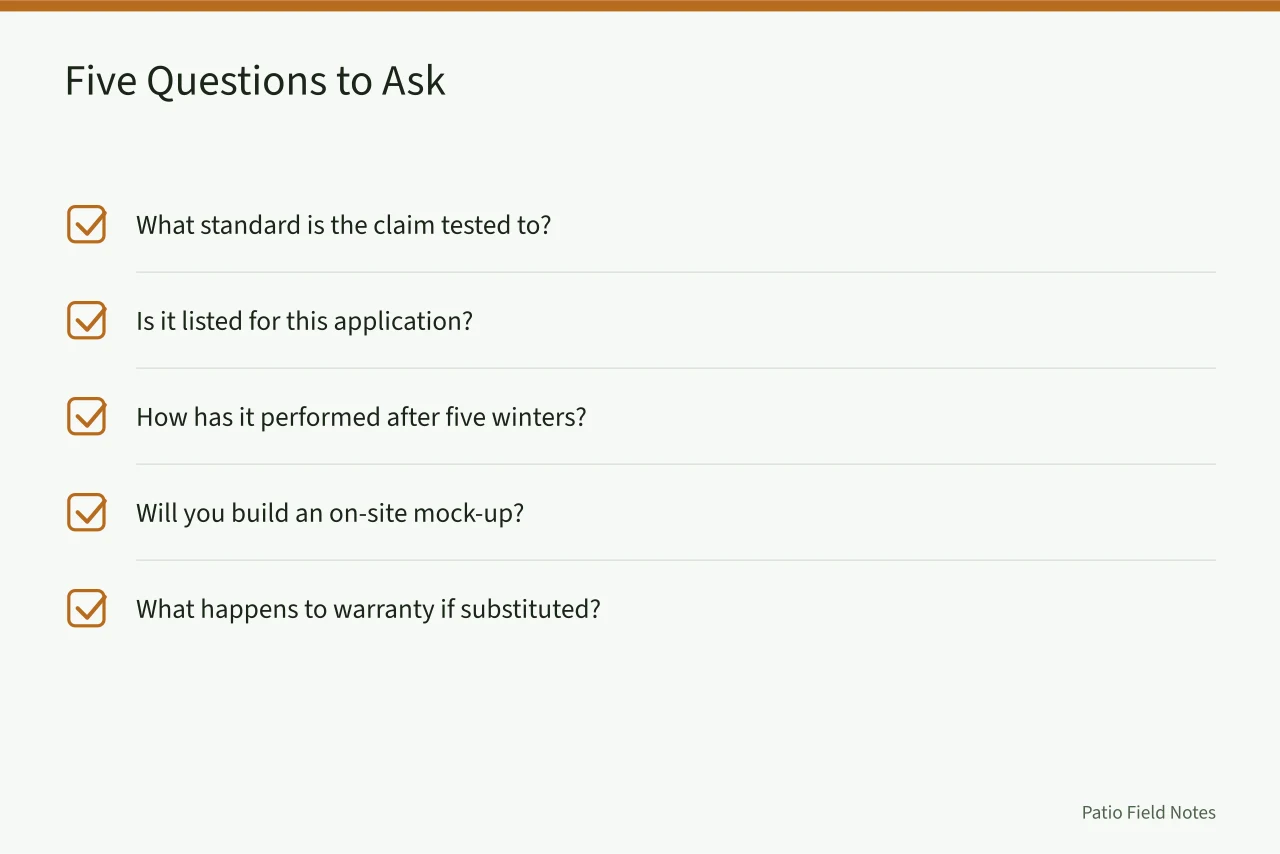
- What standard is that performance claim tested to, and under what conditions?
- Is the product listed or certified for outdoor use in this specific application?
- What have you seen this product do locally after five winters?
- Will you build a mock-up on site before we commit to the whole area?
- What happens to the warranty if any component is substituted?
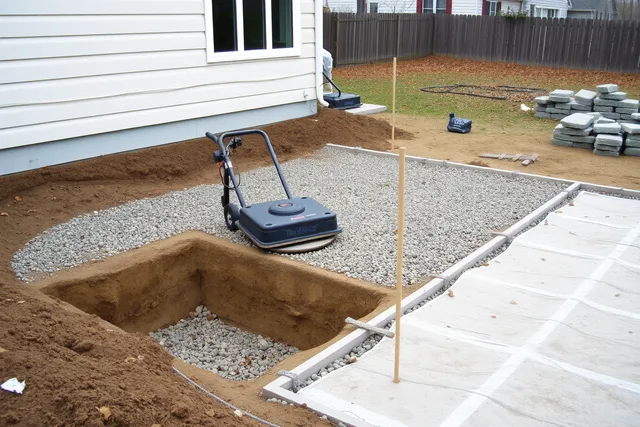
The mock-up question is the sharpest. A firm that builds a square yard of the proposed assembly, leaves it a month, and lets you inspect it has confidence in the specification. A firm that calls the request unreasonable is quoting a catalog.
That habit connects to the regional practice differences that decide which products survive locally.
Specifying from data rather than preference
In exposed regions, product selection should follow evidence about the hazard. The U.S. Fire Administration maintains data resources on wildland urban interface fires to understand WUI fire characteristics, assess risk, and prepare for response. It includes incident analyses that show how specific fires spread.
A contractor working near wildland who has never looked at that kind of material is specifying on habit.
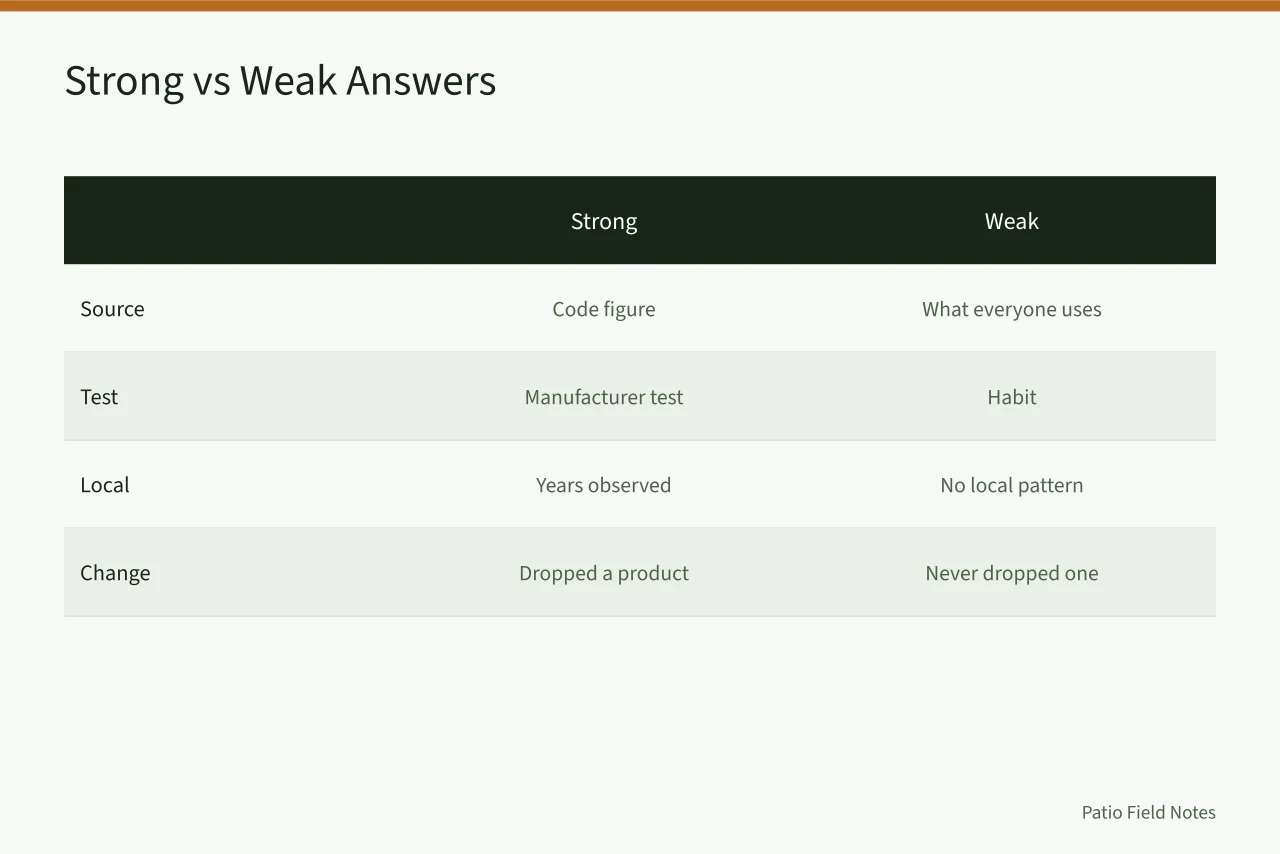
The same principle applies to storm exposure, corrosion and heat. Ask where the firm's assumptions come from. Good answers cite a code figure, a manufacturer test, or a local pattern they have observed over years. Weak answers cite what everyone uses.
There is a fair test of this that costs nothing. Ask what product the firm stopped using, and why. A specifier who has changed their mind about something in the last few years is watching how their work performs. A specifier who has never dropped a product either has extraordinary luck or is not going back to look.
The ambience items nobody wants to discuss
Every outdoor project reaches a point where the client wants flame: lanterns, candles on the table, a fire feature closer to the seating than the manual allows.
The National Fire Protection Association's candle safety guidance says candles cause home fires and home fire deaths. Point clients there rather than deferring to taste.
Battery-operated alternatives remove the ignition source entirely, so they belong anywhere near fabric, cushions, or dry planting.
Real flame, where used, needs stable holders, clear space, and someone present. Every fuel-burning appliance, grill, heater, fire bowl, or chiminea stays in the open air, never under a roofed porch or screened enclosure. Carbon monoxide is odorless and gathers under a ceiling at seated height.
A contractor who states those rules unprompted is applying the same standard the rest of the seventeen hiring checks are designed to find.
Common questions
Is a mock-up expensive? Rarely, relative to the area being committed. Most disputes it prevents cost far more than it does.
What if the contractor insists on one brand? That can be legitimate experience or a supplier relationship. Ask what they would use if that brand were unavailable, and why.
Are certifications a guarantee? No, but they show the product was tested against a published standard. Check the standard actually matches your use.
Who is responsible if a specified product fails? It depends on the contract and on whether installation followed the manufacturer's instructions. Get that clause in writing.