Industry
Part of An outdoor living contractor: checks matter more than a good first impression
4 things to weigh up on outdoor living contractors
Patterns that recur across outdoor projects: the discovery moment, the group safety plan, the substitution nobody flagged, and the neighbor conversation.
Every outdoor project produces the same handful of moments. Knowing they are coming turns each one from a crisis into a decision. These are the patterns worth expecting rather than discovering.
What to take away
- The discovery moment always arrives; plan who decides and how fast.
- Crews need a group safety plan, and so do the households working alongside them.
- Product substitutions are normal and become a problem only when they are not flagged.
- The neighbor conversation happens whether or not you initiate it, so initiate it.
Lesson one: the discovery moment
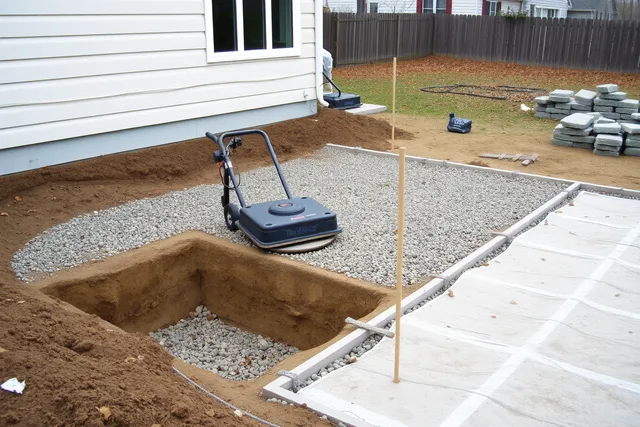
At some point the ground, the wall or the old slab reveals something that was not in the quote. Rock, an unmapped irrigation line, rotten framing, a slab twice as thick as assumed. The project stops, and the quality of the next hour decides the outcome.
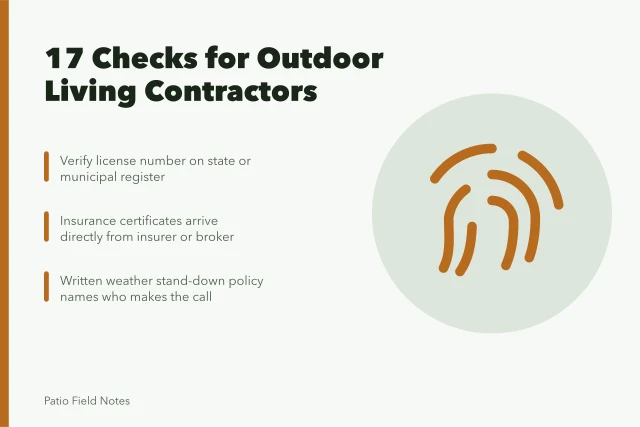
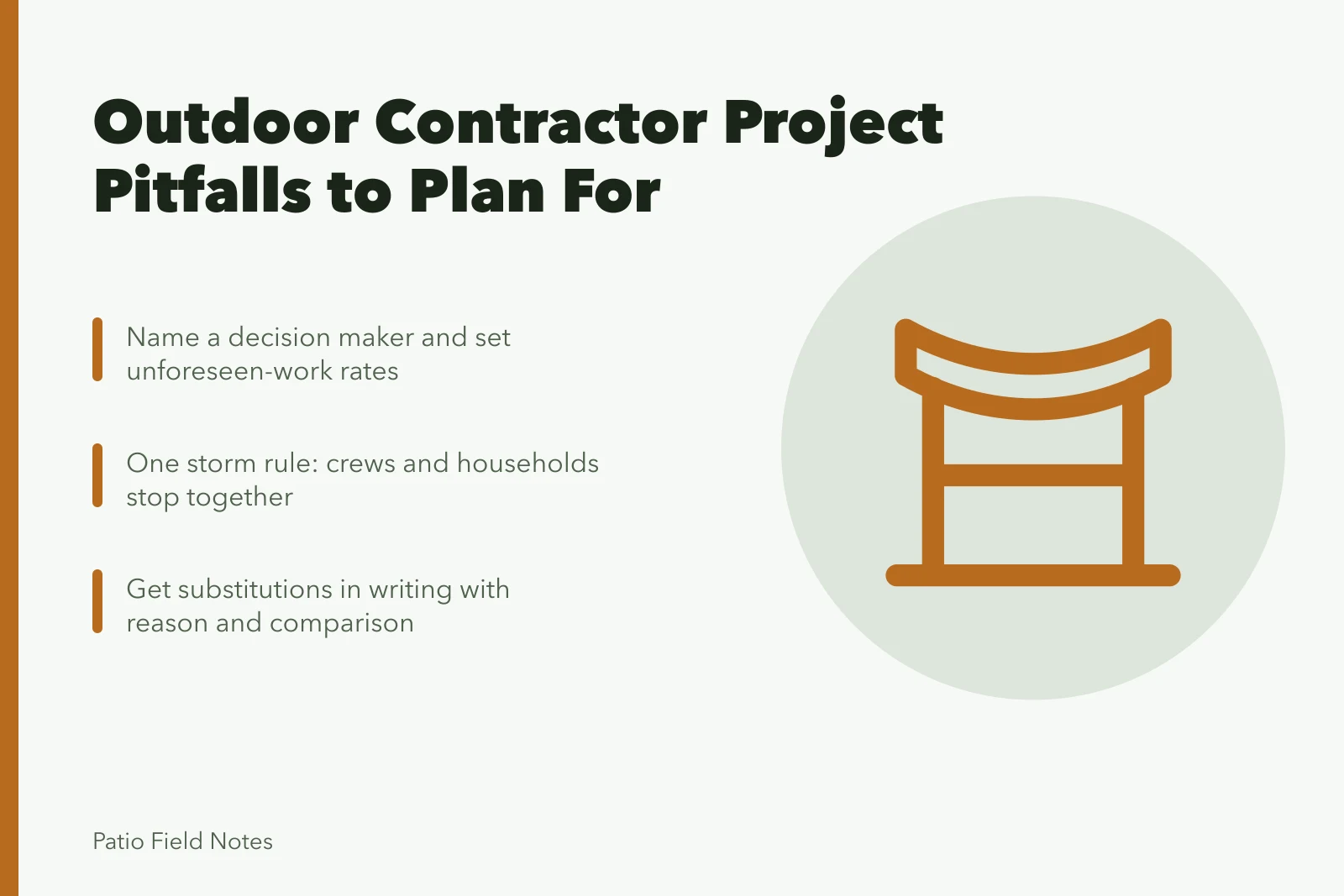
Prepare for it: a named decision maker, an agreed hourly or unit rate for unforeseen work, and a written threshold above which work pauses for approval. Without those three, discovery becomes negotiation while the crew stands still. Those clauses are part of the seventeen hiring checks.
Lesson two: everyone needs the same storm rule
Crews and households make the same mistake: waiting too long. The National Weather Service's guidance on lightning safety and outdoor activities notes thunderstorms produce an estimated 20 to 25 million cloud-to-ground flashes in the United States each year.
People routinely delay reacting because they do not want to appear overly cautious. That social pressure operates on a work site exactly as it does at a ball game.
Agree one rule for the property: when thunder is heard, everyone goes into a substantial building or a hard-topped vehicle, and work resumes 30 minutes after the last thunder. It removes the judgment call and it removes the awkwardness.
Lesson three: substitutions need a paper trail
Supply problems are normal, and a competent contractor will substitute a comparable product rather than stop the job. The failure mode is silence. A different fastener class in coastal air, a different jointing compound, a different panel thickness, and the warranty position quietly changes.
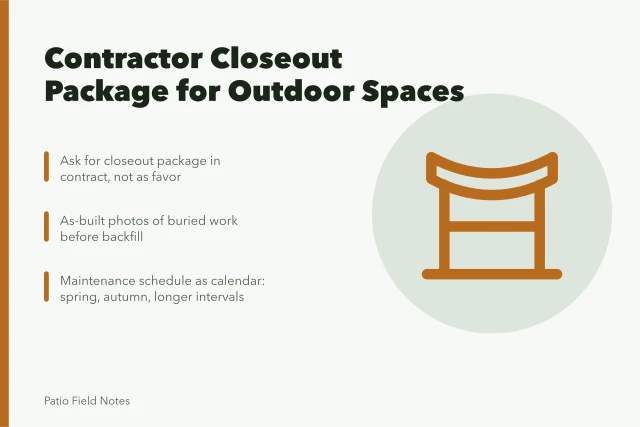
Ask for substitutions in writing with the reason and the comparison. Then check that the as-built product list matches what is actually installed, since that list is what a future contractor will work from. The whole handover file matters here, as covered in what a contractor should hand over.
Lesson four: talk to the neighbors first
Outdoor projects use shared access, produce noise, and sometimes change where water goes. The U.S. Fire Administration's wildland urban interface outreach material is built on a community premise, and it notes that almost 90 percent of wildland fires in the United States are caused by people, citing the Department of the Interior. Risk outdoors is shared, and so is mitigation.
Before work, talk briefly: dates, access, noise, and any drainage change that could affect the property next door.
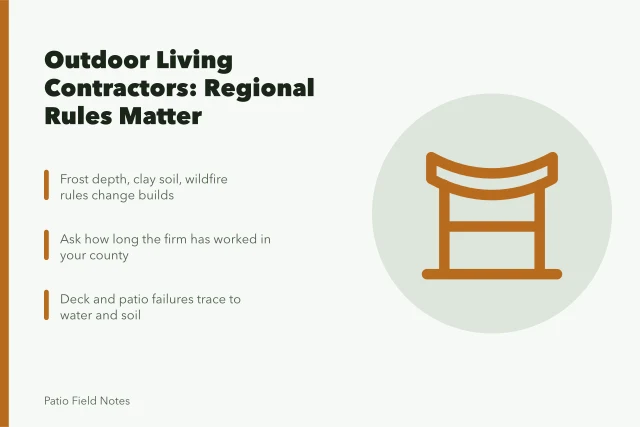
Drainage changes next door are one of the regional differences that outdoor living contractors handle differently from town to town.
Afterward, agree on sensible things, like where fire features sit relative to a shared fence and who keeps the gutters clear.
Photographs help here as much as goodwill. Take images of the shared fence, the neighboring driveway and any planting near the access route before the first machine arrives, and offer copies. It removes the ambiguity that otherwise turns an existing crack into a dispute at the end of the job.
Common questions
How much unforeseen work is normal? Enough that a contract without a rate for it is incomplete. The amount varies; the need for the clause does not.
Should I be on site during the work? Available rather than present. Being reachable for decisions matters far more than watching.
What if I disagree with a substitution? Ask for the original, priced and scheduled. Sometimes waiting is the right answer and sometimes it is not, but it should be your call.
Do neighbors have any legal say? Sometimes, over drainage, boundaries and shared access. Local rules vary, so ask the building department if anything is unclear.