Features
3 groups of small patio designs, sorted by what they solve
18 small patio designs worth a closer look in 2027: eighteen layouts that work on tight sites, grouped by what they solve, seating, cooking and shade.
Small patios fail for a predictable reason: they are designed as scaled-down large patios. A twelve-by-twelve space cannot carry a dining set, a lounge group, a grill station and a fire feature, and trying makes all four unusable. The layouts below each commit to one job and do it properly.
What to take away
- Pick one primary use per small patio. Everything else becomes secondary or folds away.
- Keep a clear walking lane of at least thirty inches from the door through the space.
- Cooking layouts are the ones with real clearance rules, so settle them first.
- Vertical surfaces, walls, fences and rails, carry the shade, storage and planting.
Six seating-first layouts
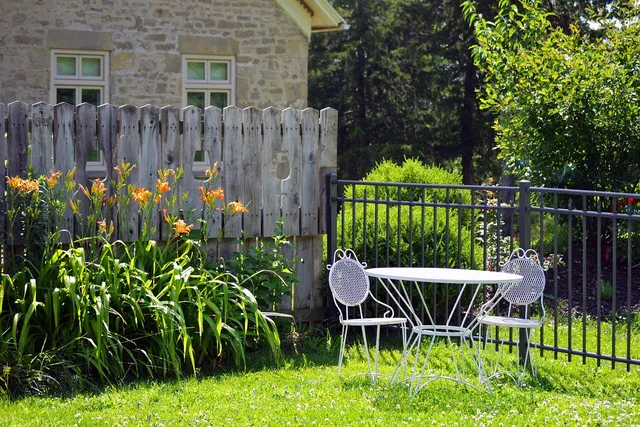
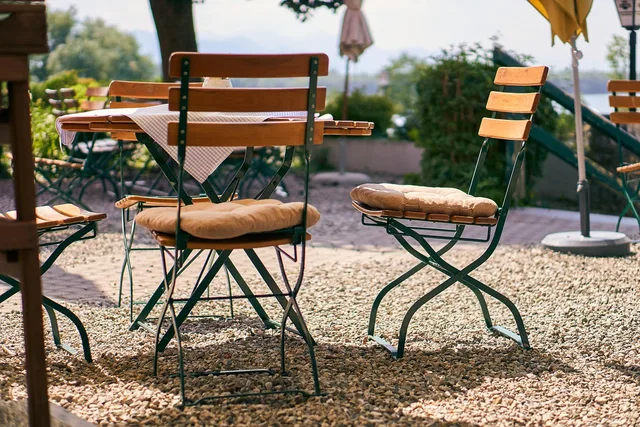
- Corner L.Built-in bench along two walls, small table in front, nothing in the middle.
- Two chairs and a shared table.The most-used layout on any balcony, and the easiest to keep clear.
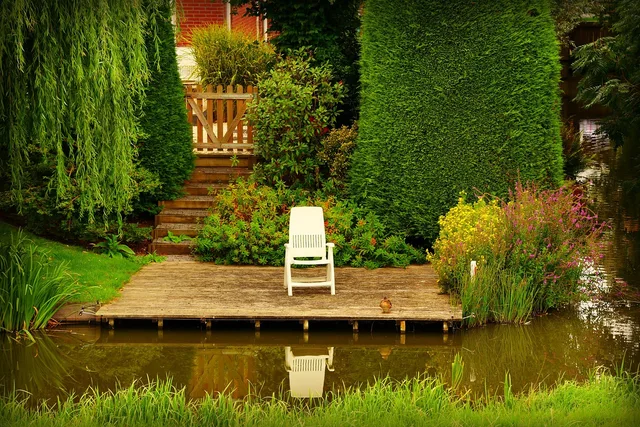
- Single deep lounger.For one person who reads outside. Honest, and it gets used daily.
- Bench with lift-up storage.Seating and cushion storage in one footprint.
- Backless perimeter seat.Reads as open, seats more people, disappears when unused.
- Sunken square.One step down inside a tight yard, which makes a small area feel enclosed.
Six cooking and gathering layouts
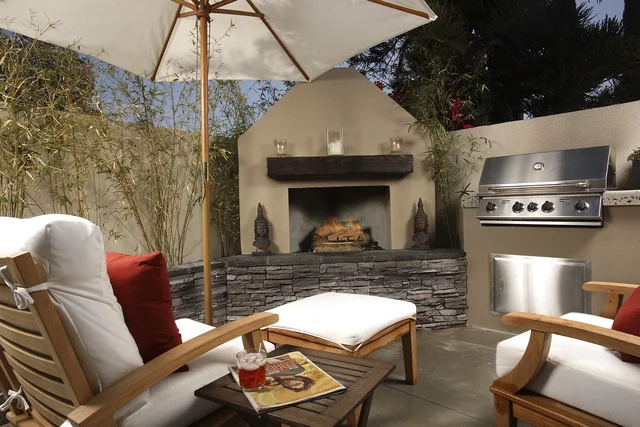
- Grill alcove off the patio.
- The grill stands on its own pad, clear of seating and siding.
- Prep ledge and stool.
- A narrow counter against a wall, no bulky island.
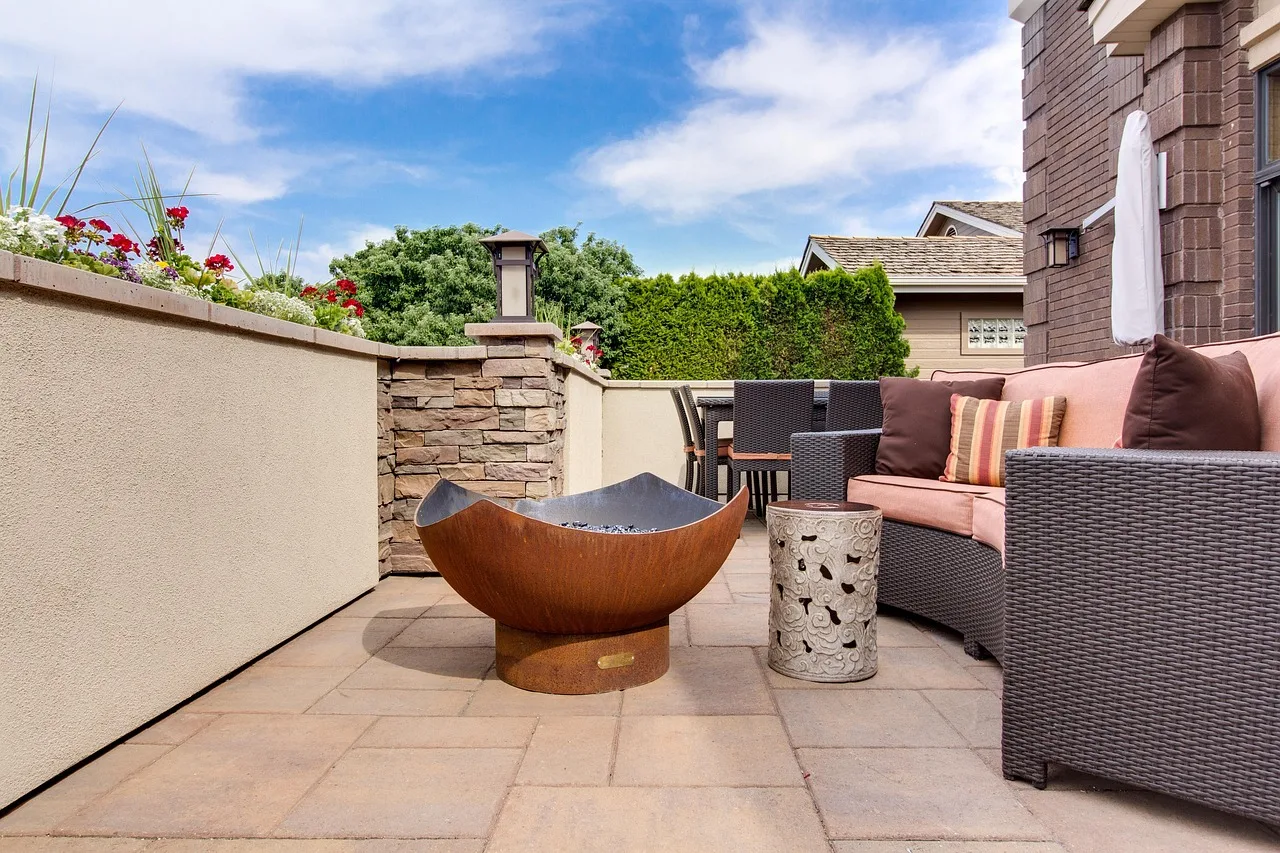
- Fire bowl with a circle of four chairs.
- Only where the clearances genuinely fit.
- Long narrow dining strip.
- Suits side yards that are wider than they look.
- Two-zone split.
- Cooking on paving, sitting on a small deck a step above.
- Pass-through window bar.
- Kitchen window becomes the serving point, no outdoor kitchen needed.
Check the National Fire Protection Association's grilling safety guidance for current advice on preventing grill fires and burns, and your specific unit's manual gives its required clearance.
Never put a grill, fire bowl or patio heater under a roof, an awning or a screened enclosure. Combustion produces odorless carbon monoxide, and a ceiling holds it at head height.
Six shade and shelter layouts
- Wall-mounted retractable awning.
- No posts stealing floor area.
- Shade sail on two posts and two wall anchors.
- Cheap, effective, seasonal.
- Slatted pergola sized to the seats.
- Shade over the chairs, not over the paving.
- Single large offset umbrella.
- One base, no center pole in the middle of the table.
- Green screen on the sunny side.
- Trellis and climbers, which cool the air as well as block light.
- Partial roof over half the space.
- Rain days on one side, open sky on the other.
Shade decides how many hours the space gets used. The Weather-Ready Nation summer safety hub gathers the seasonal hazards worth planning around, from heat and lightning to thunderstorms and air quality. Each of them changes how a small exposed space performs.
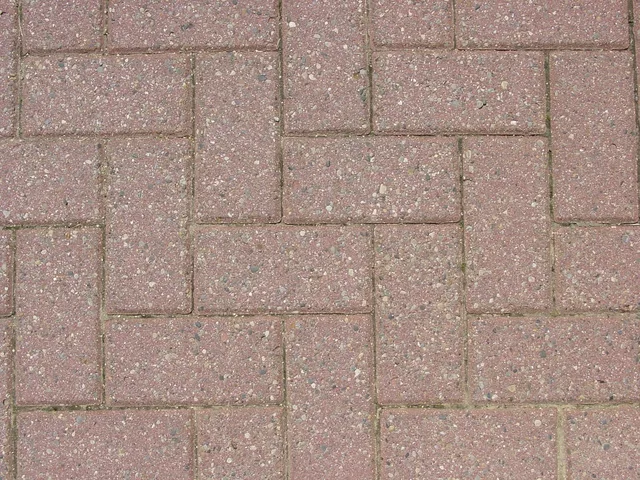
Aim the shade at the seats rather than at the paving, and check it at four in the afternoon rather than at noon, since the low western sun is what ends most summer evenings. Surface choice matters here too, which is covered in the comparison of small patio materials.
Common questions
What is the smallest usable patio?
Can a small patio have a fire feature?
Should a small patio match the house material?
Do small patios need permits?
In this guide
- Small patio hires deserve pointed questions, not a handshake and a start dateWhat to ask before hiring help with small patio designs: twelve questions for a designer or installer working on a tight site, covering access, spoil removal.
- Concrete versus pavers versus gravel: small patio materials comparedSmall patio materials compared for cost and upkeep: concrete, pavers, stone, gravel, porcelain and decking on a tight site, what each costs in upkeep.
- Small patio designs checklist for homeownersA small patio designs checklist ordered by consequence, covering layout, local approvals, drainage, materials, shade, contractor scope and closeout.
- Small patio faults and what causes them: ponding, washout, rocking furniture, umbrella gusts and hot surfacesFive small patio faults explained: ponding water, joint washout, rocking furniture, umbrella gusts and hot surfaces, with causes and what the fix depends on.
- Small patio permits: setbacks, coverage limits and rules that differ by townSmall patio designs rules: setbacks, impervious coverage, structures and open burning rules all differ by town. What triggers a permit on a small patio.