
Guides
Outdoor living: drainage, shade, seating and light
An outdoor living plan built around four systems — drainage, shade, seating and light — plus heat, fire and carbon monoxide safety and permit basics.
Most outdoor living plans start with a photograph and end with a slab nobody sits on. Start with arithmetic instead.
How many hours a year will this household be outside, and what stops them the other days? Answer honestly, and the plan gets simpler, cheaper, and easier to defend to whoever signs the check.
What to take away
- Usable hours, not square footage, decide whether an outdoor space earns what it costs.
- Four systems carry everything elsedrainage, shade, seating and light. Leave one out and the space quietly empties.
- Heat and thunderstorms end more evenings than rain does, and both have plain federal guidance worth reading at the planning stage.
- Anything that burns needs the clearance its own manual specifies, and a firm rule about what is overhead.
Walk the space before you count square feet
Walk the yard at four in the afternoon in July, not ten in the morning in May. West-facing concrete can be unusable until dusk. A shaded twelve-by-fourteen terrace on the north side stays comfortable most of the day.
Note where wind funnels between houses, where mosquitoes gather at dusk, and where the neighbor's condenser runs. Those observations cut more waste from a budget than any material comparison will.
If the hour count comes back low, the fix is usually shade and air movement, not more paving. The same arithmetic applies on a balcony or a narrow side yard, where small-space options often buy more sitting time per dollar than a wide open patio.
The four systems, in build order
| System | What it has to do | Sign it was skipped |
|---|---|---|
| Drainage | Move roof and surface water away from the house | Standing puddles, stained siding, mossy joints |
| Shade | Block afternoon sun over the seating, not the lawn | Chairs shoved against the wall by two o'clock |
| Seating | Fit the real group size, not the party size | Furniture living in the garage most weekends |
| Light | Extend the evening without glare | Phone flashlights on the steps |
Drainage means getting roof water and surface water away from the foundation: extended downspouts, a surface that falls away from the house, and somewhere for the water to go — a French drain, a swale or a dry well.
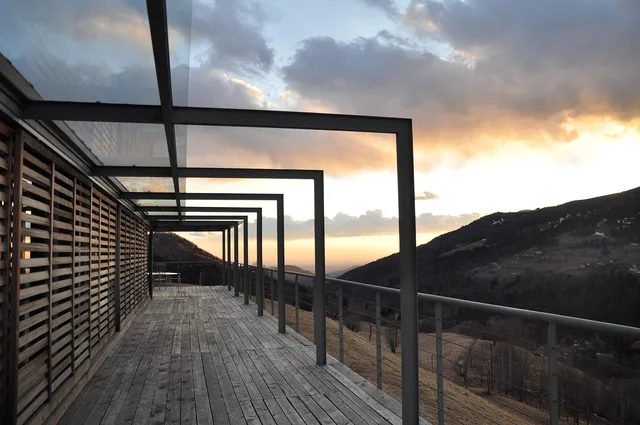
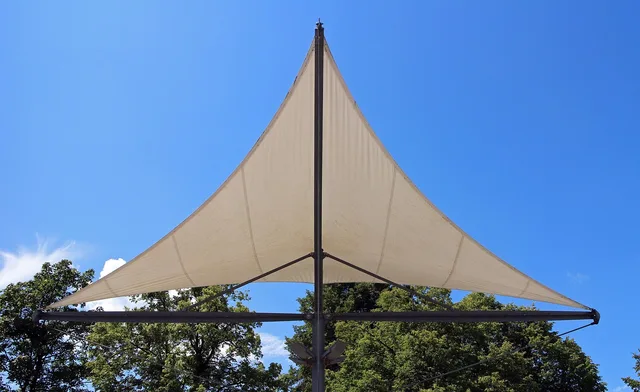
Shade can be an open pergola, a fabric shade sail, a patio umbrella, a retractable awning, the house's own overhang, or a deciduous tree that leafs out for the summer.
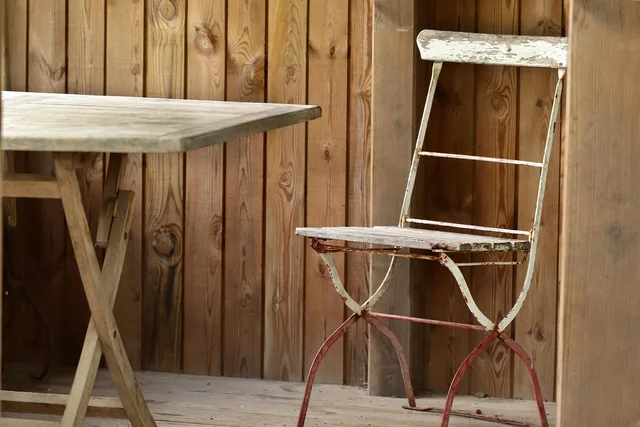
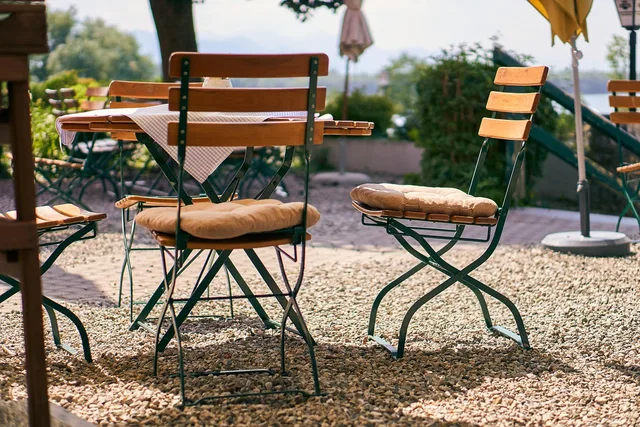
Seating starts with where people actually sit: a dining group sized to its table, lounge chairs parked in the deepest shade, and a bench or two left in the sun for the shoulder months.
Light is the last layer, and the easiest to change: low-voltage path lights along the walk, step lights at the level changes, and warm string lights overhead, each fixture shielded so the bulb stays out of sight.
Build in that order. Drainage is buried, so it is the only one you cannot add later without demolition. Lighting is the cheapest to change and the easiest to over-buy, which is why it belongs last in the sequence and near the top of the upgrades that repay their price.
Heat, thunder, and anything that burns
Heat is the quiet risk. The National Weather Service describes the progression from heat cramps through exhaustion to heat stroke, lists symptoms, and says to call 911 if heat stroke is suspected.
Design around it: deep shade over seats, drinking water within reach, and a household habit of moving indoors instead of pushing through the day's worst two hours.
Fire is the loud one. The U.S. Fire Administration reports that unintentional acts are the leading cause of outside fires, and sparklers alone can reach 1,200 degrees Fahrenheit.
Read the manual for every grill, heater, fire pit and chiminea, then write the clearance it specifies onto the site plan.
Open burning rules are set locally, so the only authority that counts is your own fire department or municipality.
One rule has no exception. Never run a grill, patio heater, generator or fire pit under a roofed porch, inside a screened room, or in any partly enclosed space. Burning fuel produces carbon monoxide, it has no smell, and a ceiling holds it exactly where people are sitting.
Common questions
How much should an outdoor space cost?
Is a covered patio better than a pergola?
What has to be settled before I call a contractor?
When is a permit needed?
In this guide
- What actually fits into a tiny outdoor living space?Small-space options for outdoor living that work: balconies, stoops and side yards can be real rooms. What fits in eight by ten feet, where grills belong.
- No shade and no outlets top the list of outdoor living regretsHomeowners regret missing shade, badly placed electrical outlets, fire pits sited too close, and patios sized for a party instead of a Tuesday.
- Where do the weeks actually go in an outdoor living build?What an outdoor build really takes, week by week: permits, utility locates, weather windows, cure times, and the lead items that decide the finish date.
- How to vet an outdoor living contractor: documents to checkVetting an outdoor living contractor is a paperwork job: verify the license and insurance, name the permit holder, and tie payments to finished work.
- Shade beats an outdoor kitchen for everyday value, hour for hourWhich outdoor living upgrades add everyday value: ranked by cost per hour of use, shade, air movement, task lighting, drainage and storage beat outdoor kitchens.