Guides
Part of Getting patio furniture systems right the first time (2027 update)
Patio furniture holds up longer when its care follows a written checklist
Homeowner checklist for patio furniture systems in 2027: measure, specify, receive and maintain, a four-part furniture checklist covering access, clearances.
Furniture is the last purchase in an outdoor project, and often the most rushed. This checklist slows that decision to about a week.
That is usually enough to prevent two common outcomes: pieces that do not fit and pieces nobody sits in. A written checklist also helps you test patio project products on a small area before committing to a full set.
What to take away
- Measure the space and the access route before browsing anything.
- Set clearances from grills, heaters and walkways on the plan, not in the store.
- Agree the storm routine at the same time you buy, and rehearse it once.
- Teach the household rules, including the children, rather than assuming them.
Before you shop
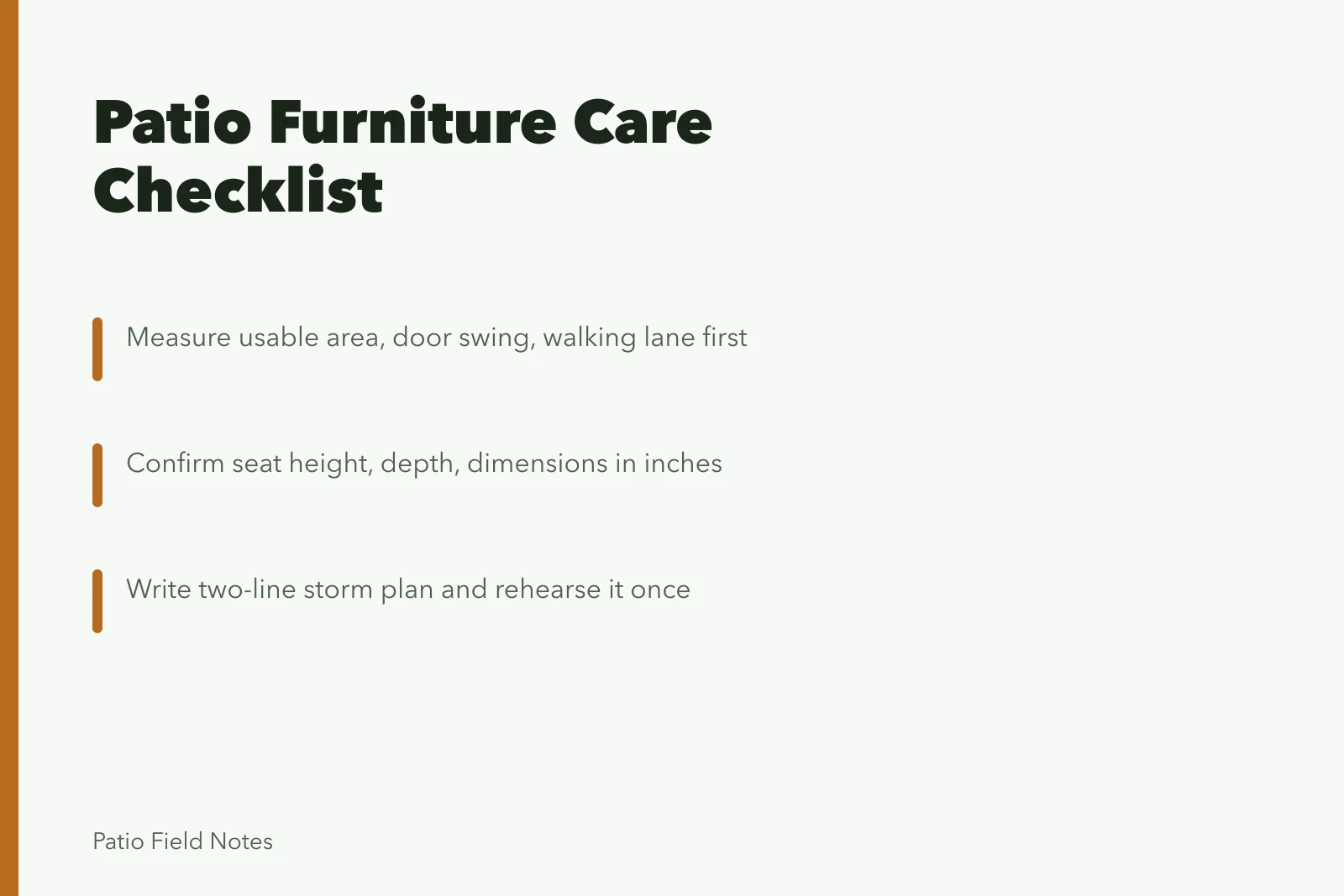
- Measure the usable area after subtracting the door swing and a walking lane.
- Measure the access routedoorways, gates, stairs, turns and ceiling height.
- Mark where the grill or heater sits and apply its manufacturer clearance to the layout.
- Decide the primary usedining, lounging or both, knowing both rarely fits.
- Count who uses the space weekly, not who attends the annual gathering.
While specifying
- Ask for seat height, seat depth and total dimensions in inches.
- Confirm frame material and fastener grade, especially near salt air.
- Check that cushion fabric and fill suit your humidity and sun exposure.
- Confirm assembly, delivery access and packaging removal in writing.
- Confirm stacking or folding, and time how long a full set takes to stow.
That last item matters most in storm-prone regions, and it is the property most easily overlooked in a showroom, as noted in the comparison of furniture materials.
The storm routine, agreed once
Write a two-line plan and put it where the household will see it: who closes and stows the umbrella, who carries the cushions, and where everything goes. Then rehearse it once so the timing is known rather than guessed.
The National Weather Service's lightning guidance is unambiguous: No place outside is safe when thunderstorms are in the area.
Hearing thunder means lightning is close enough to strike, so a substantial building or enclosed metal-topped vehicle is safe, with at least 30 minutes indoors after the last thunder. Furniture can be rescued afterward, but people cannot.
Teach the rules, including to children
Outdoor spaces have rules that adults absorb and children do not. FEMA's Ready campaign publishes preparedness material aimed at children and families, built on the premise that everyone in the household can take part in preparing rather than only the adults.
Three household rules cover most of it. Nobody sits or leans on a table that is not built to carry weight. Nobody moves a chair into the grill's working zone. And nothing that burns fuel comes under the porch roof or into a screened area, because carbon monoxide is odorless and collects under a ceiling at seated height.
Adults keep those rules better when the layout makes them easy, which is the design principle running through the self-review method for furniture.
After it arrives
- Photograph the set on delivery and keep the receipts and warranty cards together.
- Torque fasteners to the manufacturer's specification after a few weeks of use.
- Wash and dry cushions before storage rather than after.
- Check fasteners and joints each spring, and replace any that show corrosion.