Reviews
Getting patio furniture systems right the first time (2027 update)
A test method for outdoor furniture that works in any showroom: frames, joints, fabrics, stowability and the fire and clearance questions nobody asks.
Brand reviews age badly. Model lines change yearly, regional availability differs, and the same collection can be built to different specifications for different retailers. What does not change is how to inspect a piece of outdoor furniture in ten minutes and predict how it will behave in three years.
What to take away
- Test the frame and the joints first. Fabric and cushions are replaceable; a failed frame is not.
- Stowability is a real specification, because furniture that cannot be moved quickly gets damaged.
- Seat height, depth and stability matter more than style for daily comfort.
- Keep cushions and covers away from grills and heaters, and never store fuel with them.
The ten-minute inspection
Seven tests, ten minutes, in this order.
- Lift it (1 minute).Very light usually means thin-walled frames and a piece that moves in wind. Very heavy means it stays put but never gets stowed.
- Push diagonally (30 seconds).Any racking movement now becomes a wobble in two seasons.
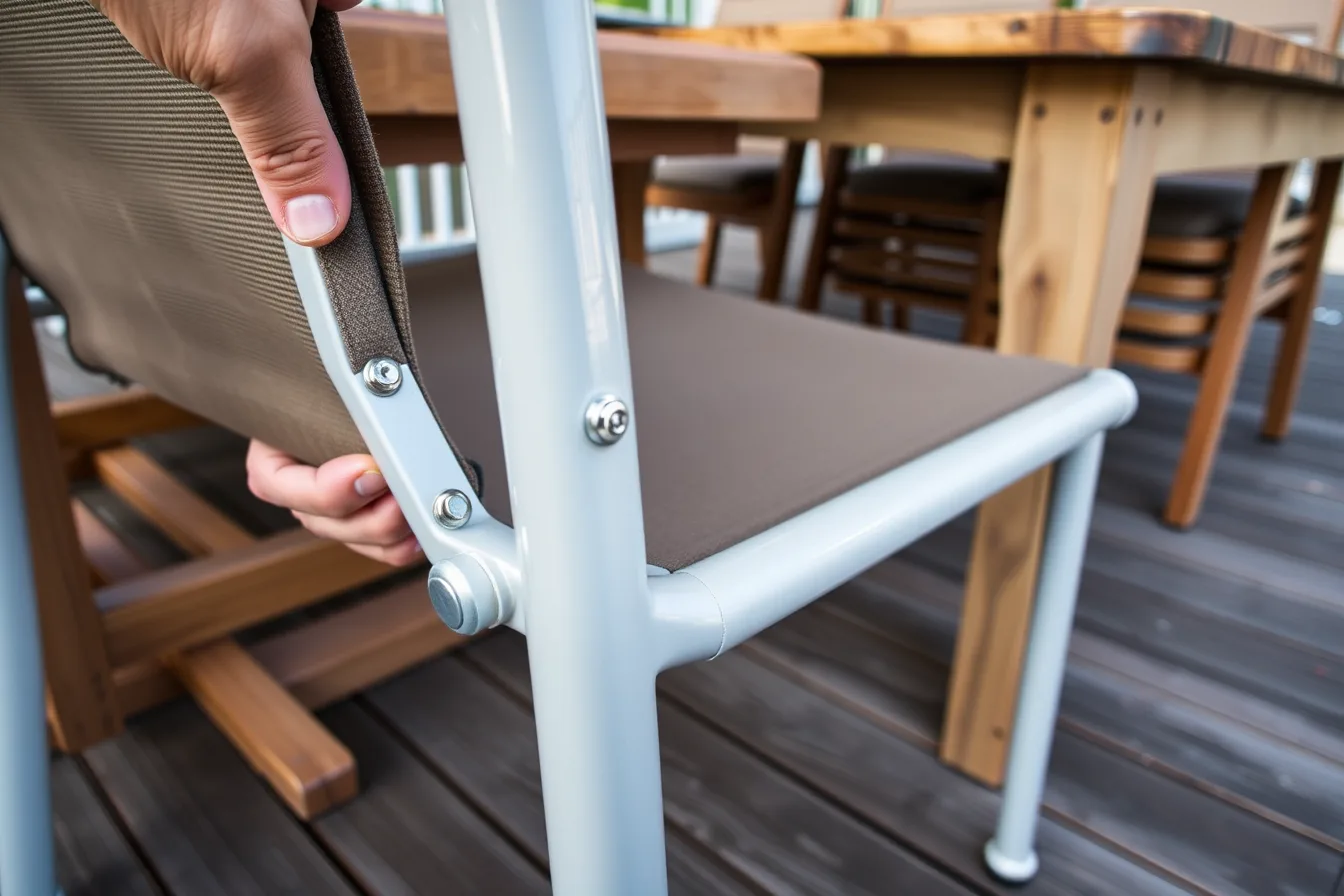
- Look at the joints (1 minute).Welded and bolted joints with visible reinforcement outlast press-fitted tubes.
- Check the fasteners (1 minute).Ask what grade they are. In coastal air this is the first thing to fail.
- Examine the fabric edges (1 minute).Look at stitching, binding and how covers close. Zippers and seams fail before fabrics do.
- Sit for two minutes.Seat height and depth decide whether the household actually uses it.
- Fold and stack it (3 minutes).Time how long a full set takes to stow. That number matters more than people expect.
The seven steps total nine and a half minutes, so the ten-minute claim holds. Write the answers down for each candidate and compare like with like: outdoor upgrades by everyday value ranks the property that decides use, not the property that decides the photograph.
Ten-minute inspection checklist
- Lift itthin frames move in wind
- Push diagonallyracking becomes wobble
- Look at jointswelded and bolted outlast press-fit
- Check fastenersgrade matters in coastal air
- Examine fabric edgeszippers and seams fail first
- Sit five minutesseat height and depth decide use
- Fold and stacktime a full set
Aluminum, teak and resin compared
Frame material decides weight, rust risk and repairability. Model lines get renamed most years, and the 2027 catalogs are no exception.
- Aluminum.Light, does not rust, easy to stow. Coating can chip; thin tube flexes.
- Teak.Dense, repairable, forgiving of neglect. Heaviest option; weathers to gray unless oiled.
- Resin (HDPE, polypropylene).Cheapest, never rusts, color runs through the material. Cheap grades go brittle in sun and joints cannot be tightened.
- Steel.Strong for the money. Rust starts where the coating breaks, so it suits dry climates.
Ask the fastener grade too. Stainless survives coastal air; plated steel does not.
Typical US price bands for a four-seat dining set:
Typical price
- Entry
- $300 to $900
- Mid
- $1,000 to $2,500
- Upper
- $3,000 and up
What you get
- Entry
- Thin-wall tube, press-fit or tack-welded joints, polyester cushions good for a season or two
- Mid
- Welded aluminum or coated steel, stainless fasteners, replaceable cushions
- Upper
- Teak or heavy-gauge aluminum, fully welded or mortise-and-tenon joints, marine-grade fabric
Prices vary with freight, season and region. Judge a tier by the frame and fasteners, not the cushion.
Stowability is a safety specification
Outdoor furniture becomes a hazard in high wind. FEMA's Ready campaign's guidance on tornado preparedness covers what to do under a warning and how little time a household usually has. The same logic applies in any severe wind event: whatever is loose outside will move. A dining set that takes twenty minutes to stow will not be stowed.
Four stowability tests
- Can one adult stack the chairs alone?
- Does the umbrella close without tools?
- Are cushions stored within a few steps?
- Can the table be weighted or tied down?
Practical tests: can one adult stack the chairs alone, does the umbrella close without tools, is there somewhere to put cushions within a few steps, and does the table have a way to be weighted or tied down. Furniture that passes those four is furniture that survives.
The fire questions nobody asks in a showroom
Outdoor seating gets arranged around heat sources, and cushions are combustible. The U.S. Fire Administration organizes its home fire safety guidance by audience, including children, older adults and people with disabilities. That is a useful reminder when arranging chairs: the person seated nearest the grill may be the one least able to move quickly.
Keep seating out of the grill's working zone, follow the manufacturer's clearance for the appliance, and never store cushions, covers or fuel in a cabinet beneath a grill.
The second rule is absolute. Grills, patio heaters, fire bowls and chimineas operate in open air. Never use them under a roofed porch, awning or screened enclosure. Carbon monoxide is odorless and collects under a ceiling at seated height.
Arrange furniture so the rule is easy to follow, not inconvenient. The household will keep to it. Contractors who have built these layouts before raise clearance unprompted. Check the manufacturer's manual and real project lessons before you fix a layout.