Features
Part of Outdoor living: drainage, shade, seating and light
What actually fits into a tiny outdoor living space?
Small-space options for outdoor living that work: balconies, stoops and side yards can be real rooms. What fits in eight by ten feet, where grills belong.
An eighty-square-foot balcony and a quarter-acre back yard have the same problem in different sizes: one good seating spot beats four mediocre ones. Small sites are unforgiving because every mistake is in the way. They are also cheap to test, which makes them the best place to learn what your household actually uses.
What to take away
- Furnish for two or three people who sit there weekly, not eight who visit twice a year.
- On a balcony, check the lease, condo rules and local fire code before buying any grill or heater.
- Vertical surfaces do the work in small spaceswall-mounted shade, rail planters, hooks and a fold-down table.
- Small does not mean sheltered. There is no safe place outside once thunder is audible.
What actually fits
Three layouts for eight by ten
Bistro setup
- Seating
- Two chairs
- Table
- Bistro table
- Extras
- None
- Walking lane
- 30 inches clear
Two-seat sofa
- Seating
- Two seats
- Table
- Narrow coffee table
- Extras
- None
- Walking lane
- 30 inches clear
Deep lounge chair
- Seating
- One chair
- Table
- Side table
- Extras
- Plant
- Walking lane
- 30 inches clear
Fitting two is the classic error. Measure the walking lane first. Keep at least thirty inches clear from door to rail, and place furniture against the long wall so the diagonal stays open.
Storage decides whether a small space survives the winter. A weatherproof bench that swallows cushions, a folding table that hangs flat, and one hook rail will do more for daily use than another chair. Cheap fixes tend to outperform expensive ones here, a pattern covered in more depth in the guide to planning outdoor living around usable hours.
Cooking, heat and the rules that apply to you
Balconies are where enthusiasm meets fire code, and many multifamily buildings restrict or prohibit charcoal and propane grills on balconies and within a set distance of the building.
Leases and condo bylaws often add limits, so check all three before you buy. A grill you cannot legally use is a storage problem, not a feature. If you rent, get the manager's answer in writing.
Electric appliances avoid the fuel question but not the heat question. Nothing that burns belongs under a roof overhang, an awning, or inside a screened balcony. Carbon monoxide is odorless and collects under a ceiling, and a small enclosed space fills faster than a large one.
Shade, water and the stop rule
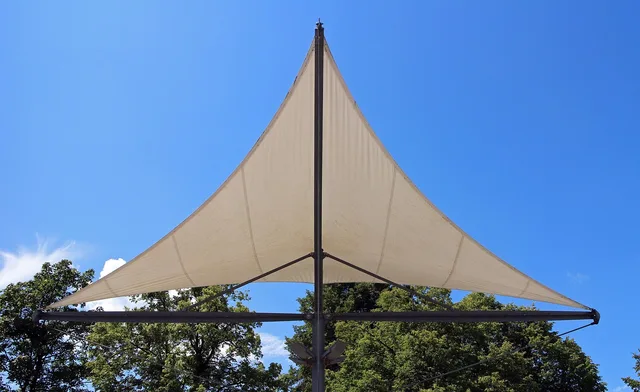
FEMA's Ready campaign publishes a summer preparedness page that pulls together heat, storm and power-outage advice into one place, which is a fair starting checklist for a small outdoor space that has no indoor buffer. A clamp-on umbrella, a shade sail anchored to the wall, or a simple canopy will add more usable afternoons than any furniture upgrade.
The stop rule matters more on a balcony than in a yard, because leaving takes longer than people think. The National Weather Service is blunt about it: there is no safe place outside when a thunderstorm is in the area, and if you can hear thunder you are already within striking distance.
Decide in advance who carries the cushions in and who closes the umbrella, then go inside. Learning that habit early prevents the kind of soaked-and-scrambling evening that shows up in what homeowners end up regretting.