Maintenance
Part of Grading decides whether outdoor space makeovers actually last
Most outdoor space makeover regrets trace back to upkeep, not design
Makeover regrets are mostly about upkeep: too much planting, too many materials and a shoulder season that turned out shorter than anyone expected.
Makeover regret is different from build regret. A patio that fails is a construction problem. A makeover that fails is usually a maintenance problem: the household created a yard that needs more attention than anyone in it has time to give. The second most common regret is optimism about the weather.
What to take away
- Upkeep load is the regret that dominates, and it is set at design stage.
- Too many materials and too many small beds multiply the work invisibly.
- People overestimate how much they will use a yard in cold weather.
- People also underestimate how quickly a storm ends an evening outdoors.
The upkeep regrets
- Planting beds sized for a keen gardener.Beds are the highest-maintenance element per square foot in most yards.
- Four materials where two would do.Every junction between materials is a place weeds start and edges fail.
- Irrigation added without a plan to maintain it.Emitters clog, timers fail, and nobody checks until plants die.
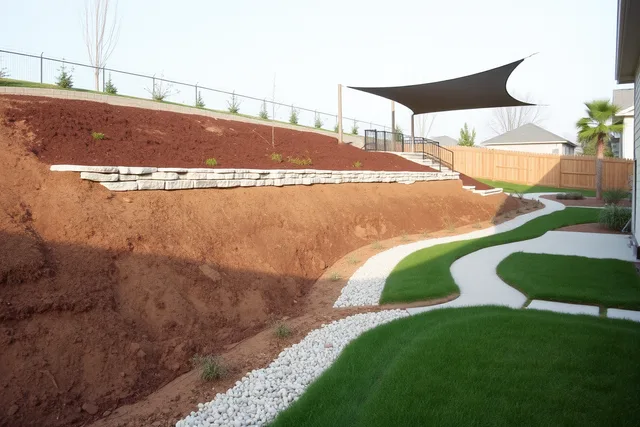
- Turf shapes that cannot be mowed in straight lines.Curves look good on paper and cost time every week.
- A water feature nobody wants to clean.These are the elements most often switched off within two years.
The pattern is consistent: the makeover created work rather than reducing it. Anyone who works full time should design for the upkeep they will actually do in February, not the amount they imagine doing in May.
Upkeep Regrets to Avoid
- Planting beds sized for a keen gardener
- Four materials where two would do
- Irrigation added without a maintenance plan
- Turf shapes that cannot be mowed straight
- A water feature nobody wants to clean
A useful test at design stage is to write down the hours per month the household will spend, then ask the designer to keep the plan inside that number. It is a constraint like any other, and stating it early produces better proposals, not duller ones. The makeover patterns worth studying all work better in their low-maintenance versions.
The shoulder-season regret
Almost every makeover is sold on extending the season. In practice, cold evenings outdoors are harder than people remember. The National Weather Service publishes survivor accounts of extreme cold, submitted stories where ordinary outdoor activity turned serious.
Wind Screen vs Heater
Wind screen
- Effect on cool evening
- Does more
- Placement rule
- Anywhere
- Safety risk
- None
- Treat as
- Design element
Heater
- Effect on cool evening
- Less than wind screen
- Placement rule
- Covered or open air only
- Safety risk
- Carbon monoxide
- Treat as
- Equipment with rules
A patio in autumn is a different setting, but the underlying point holds: people misjudge cold, particularly when they are enjoying themselves.
Design accordingly: a wind screen does more for a cool evening than a heater, because wind removes comfort. Keep the retreat indoors short and lit, and treat any heater as equipment with rules.
Electric infrared must be under a cover; fuel-burning models belong in open air only, never under a roofed porch or screened enclosure. Carbon monoxide is odorless and collects under a ceiling at seated height.
The storm regret
The other common misjudgment is how much warning a storm gives. The National Weather Service's material on the science of lightning explains that lightning is a discharge that occurs once air can no longer insulate the difference in charge.
It also points to data on how flashes are distributed across states. At a garden table, that means the storm you can hear is already close enough to matter.
The design consequence is a lit, unobstructed path from the seating to a door. Makeovers that place the seating at the far end of a winding path, across steps, past a border, guarantee that people will wait too long before moving. Households that regret the layout usually describe exactly that, as the small-space makeover approach is designed to avoid.