Costs
Part of Patio Projects Planning: 3 Lessons
Patio budget reserve: four unknowns that decide it
Why a flat percentage only starts a patio budget reserve, the four unknowns that move it, and what the reserve may and may not pay for.
A realistic patio budget holds two kinds of money: priced lines, and a reserve for what nobody can see yet. The reserve is usually the weakest part, because it gets set as a round number instead of being sized against the site. Soil, access, history and water decide how much room it needs.
What to take away
- Keep the reserve apart from allowancesallowances cover choices, the reserve covers unknowns.
- Ten percent is a starting point for a simple flat site with known conditions.
- Raise it for unknown soil, tight access or a site that once held something else.
- Existing drainage problems call for the largest reserve.
- Write down what the reserve may be spent on before work starts.
Why a flat percentage is only a start
A flat percentage is a starting point, not an answer. Ten percent suits flat, simple ground. Every unknown beyond that pushes the number up, so the honest question is how much of the ground, the access and the drainage you have actually seen.
National cost-per-square-foot figures cannot size it. They average a flat, accessible suburban yard and usually exclude the excavation, disposal and drainage work that separates a good patio from a bad one. Your own site is the only honest input, so size the reserve from what is known about it.
Four unknowns that set the reserve
Four unknowns set the reserve: what the soil is, how equipment reaches the work area, what the site held before, and where the water goes. Each one can raise or lower the number, and each one can be narrowed before anything is signed.
| Unknown | Raises the reserve when | Lowers it when |
|---|---|---|
| Soil | It is unknown below the surface | Conditions are known and written into the bid |
| Access | Access is tight for equipment and material | The work area is open and easy to reach |
| Site history | The site once held something else | The earlier use is known and nothing is buried |
| Drainage | Problems already exist or the outlet has nowhere legal to go | Direction, fall and outlet are defined in writing |
How much contingency to reserve
Site conditions?
Simple flat site with known conditions -> 10%
Unknown soil, tight access, or prior structure -> More than 10%
The guide reads as a path through the site. Start from ten percent for flat ground, then move up at each unknown you cannot rule out. Stop moving up only when the bid names the condition and prices it as a defined line.
Keep the reserve apart from allowances
An allowance is for a choice not yet made. The reserve is for a fact not yet found. Mixing them hides both. A bid that says "paver allowance" with no unit price and no named product invites a change order at selection time, paid from whatever slack exists.
If a real selection cannot be made yet, fix the unit price and the included quantity so only the difference is negotiable. Then the reserve stays free for ground surprises instead of absorbing upgrades. The renovation regrets that follow vague allowances show how quickly that slack disappears.
Drainage gets the largest reserve
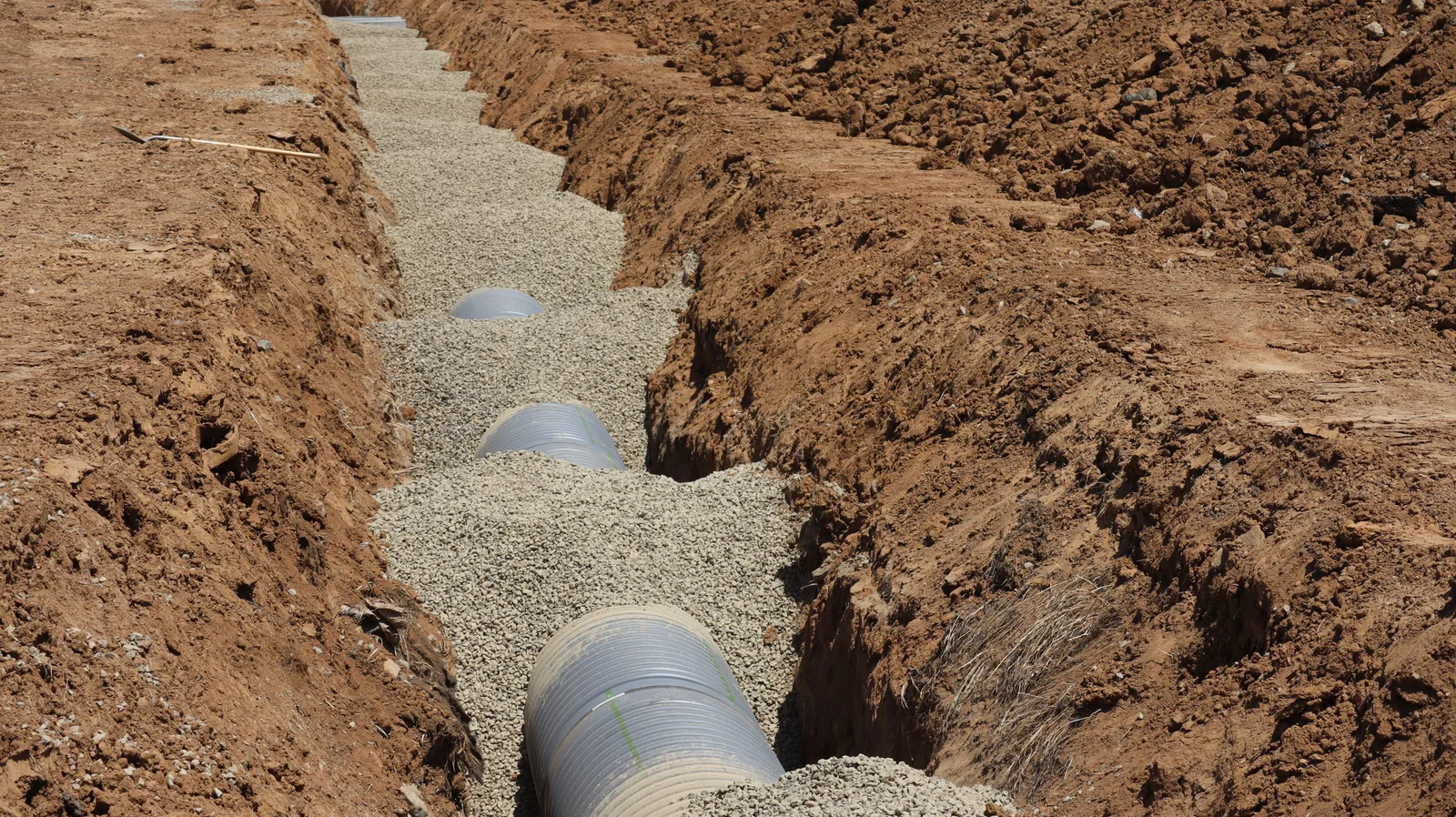
Existing drainage problems deserve the largest reserve, because surface work usually cannot proceed until they are solved. Drainage is the line item most often trimmed and most expensive to revisit, so a bid that leaves it vague is hiding the biggest unknown in the job.
Water that ends up against a foundation, or ponding across the new surface, turns a cosmetic project into a repair project. The National Weather Service's flood hazard resources provide broader flood-risk context, but a patio bid still needs a site-specific drainage scope.
A defined scope states the direction and fall the surface is set to, the length of each pipe run, where the outlet sits and where the water is discharged. If a bid cannot say where the outlet discharges, that line is not yet priced, and the reserve is quietly carrying it.
Electrical work is the other line that can surprise a budget, through permit and licensed electrician time. When it adds outdoor circuits, fixtures or appliances, FEMA's Ready campaign has preparedness guidance on household outages that is worth reading before deciding what those circuits must power.
Where the reserve gets drawn
The reserve is drawn on when a priced line turns out to be wrong. Excavation, disposal and access move a bid the most, so unknowns show up there first. Each of the eight lines has its own usual surprise.
- Excavation and disposal
- rock, buried debris or an old slab.
- Base material
- depth increases after a soft-spot discovery.
- Surface units
- cutting waste on curves and diagonals.
- Edge restraint and jointing
- skipped on free edges to save money.
- Drainage
- an outlet with nowhere legal to discharge.
- Electrical
- permit and licensed electrician time.
- Structures
- frost-depth footings in cold regions.
- Restoration
- damage from equipment traffic.
Write the draw rule before work starts. The reserve pays for ground surprises on these lines, never for upgrades, and one named person approves each draw in writing. Ask the bid what happens to any unspent reserve.
Budget line items to compare
- Excavation and disposal
- Base material
- Surface units
- Edge restraint and jointing
- Drainage
- Electrical
- Structures
- Restoration
A reserve only means something against a written scope. If a bid is a single number, ask for the breakdown rather than assuming the difference is profit, since an unlisted line has nothing to be measured against. The same discipline scales up to a larger renovation budget.
Setting the number in five steps
Five moves set the reserve, and all of them happen before the contract is signed. They take an afternoon and a written bid, and they replace a guess with a number you can defend to yourself later.
- List the eight lines and mark each one you could not see for yourself.
- Start from ten percent if the site is flat and well understood.
- Raise it for unknown soil, tight access or earlier use of the site.
- Give existing drainage problems the largest share.
- Write down what the reserve may pay for and who approves each draw.
Licensing, permits, the payment schedule and the warranty belong to a separate check, laid out in the guide to a contractor bid review. Keep the drainage scope, the electrical lines and this reserve rule together with the bid in the patio planning guide.
Cold regions add frost-depth footings to the structures line, which is why regional climate changes which unknowns deserve the most room. A roofed build adds footings, posts and hardware of its own, priced in the covered patio quote lines.