Features
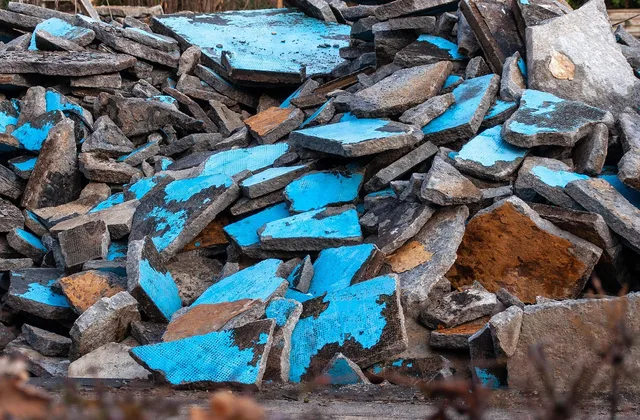
Part of What Must Come Out Before a Patio Renovation
Rushing a patio renovation timeline: which phases to protect and why compression backfires
How a patio renovation schedule runs phase by phase, and why rushing demolition, discovery, base work or cure creates later problems instead of saving time.
Renovation schedules break in a different place than new-build schedules. New builds lose time before work starts, to permits and lead times. Renovations lose time in the middle, on the day the old surface comes up and the site turns out to be different from the assumption in the quote.
What to take away
- Build a discovery pause into the schedule, right after demolition.
- Disposal capacity, not labor, often sets the pace of the demolition phase.
- Rushing the base to catch up is the compression that costs the most later.
- Weather delays after demolition are worse than delays before it, because the site is open.
How the phases actually run
| Phase | Typical duration | What can stretch it |
|---|---|---|
| Investigation and quoting | 1 to 3 weeks | Access for a test hole, contractor availability |
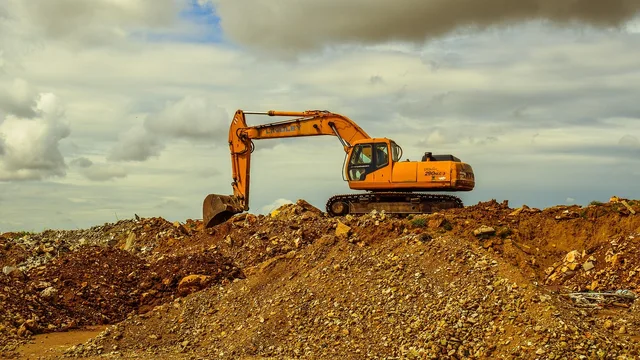
| Demolition | 1 to 4 days | Slab thickness, reinforcement, haul distance |
| Discovery and re-pricing | 1 day to 2 weeks | What was found, and how fast decisions get made |
| Base correction | 2 to 6 days | Soft spots, drainage rework, weather |
| Surface installation | 3 days to 2 weeks | Area, cutting complexity, deliveries |
| Finishing and cure | Days to weeks | Product data sheets, temperature, humidity |
The discovery row is the one people delete from their mental schedule. Deleting it does not remove the work; it just means the decisions get made under pressure, usually by the person holding the shovel. That is the same reasoning behind the reserve described in the renovation budgeting guide.
Patio renovation phase durations
- Investigation and quoting1 to 3 weeks
- Demolition1 to 4 days
- Discovery and re-pricing1 day to 2 weeks
- Base correction2 to 6 days
- Surface installation3 days to 2 weeks
- Finishing and curedays to weeks
Watch the forecast, not the calendar
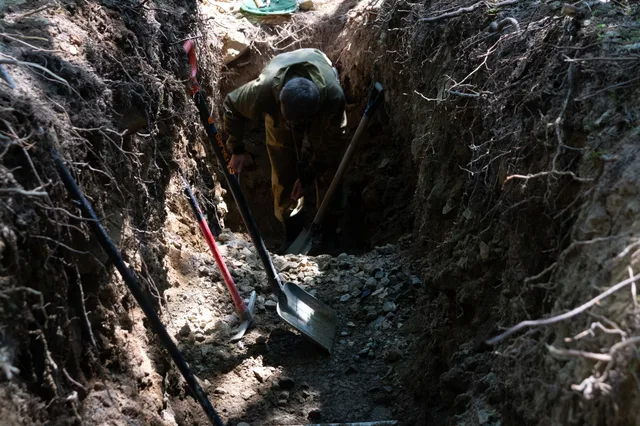
Once the old surface is off, the site is exposed. An open base takes on water, softens, and must be reworked. That is a direct cost with no visible result.
NOAA's collection of real-time data resources gathers observation tools for short-range decisions: satellites, buoys, weather stations. A two-day look ahead is usually enough to decide whether to open a site on Monday or Wednesday.
Have a written rule about protection. Who covers the excavation, with what, and how quickly. Agree it before demolition rather than during the first storm.
After the storm passes
Work does not resume the moment the rain stops. The National Weather Service's guidance on staying safe after a thunderstorm covers hazards that remain once the storm has moved through, including downed power lines and flooded areas. A construction site adds its own: standing water in an excavation, saturated base material, and a slick surface with tools on it.
Expect a half day of drying and reworking after a significant storm, and put that in the schedule rather than treating it as lost time. Rushing back onto a saturated base is exactly how a renovation ends up settling in year two.
Where compression costs money
Overtime rarely fixes a renovation schedule, because the binding constraints are curing, drying and disposal capacity, not hours worked. What compression actually buys is a base placed on damp subgrade, joints filled before the surface has dried, or a sealer applied outside its temperature window. Each of those is invisible on handover day and expensive within two years.
If the schedule slips, move the finish date, not the cure time. Deciding which parts of the scope are worth protecting is easier once you know which renovation spending earns its place.