Maintenance
Part of 3 pointers on inside porch restoration that hold up
Soft boards, wobbling rails: the common porch problems, ranked
Porch restoration problems: soft boards, peeling paint, wobbling rails, sagging steps and standing water. What each symptom means, which fixes work.
What to take away
- Ranked worst firstbouncing steps, wobbling rails, soft floor boards, ceiling stains, peeling paint.
- The first two are fall hazards, and a soft stringer or post base needs a licensed assessment.
- Trapped water, blocked airflow, a failed fastener and a roof leak cover nearly every case. Fix the first two before any board or coating.
- Beginner work is refastening balusters, swapping one board, priming and coating. Structural work is not.
The ranked list at a glance
| Rank | Problem | First check | Who does it | Typical time |
|---|---|---|---|---|
| 1 | Sagging or bouncing steps | Stringers, footings | Licensed carpenter | Assessment, then 1 to 3 days |
| 2 | Wobbling rails, loose balusters | Post base | Pro if the base is soft | 1 to 3 hours if not |
| 3 | Soft, spongy floor boards | Slope, vents, soil | DIY for one or two boards | Half a day, plus drying |
| 4 | Brown ceiling stains | Flashing, gutter | Roofer | An hour to trace |
| 5 | Paint peeling every two years | Moisture in the wood | DIY | 2 to 3 days with dry time |
Work down the list, not across it. A step that moves outranks any cosmetic fault, and a rail that flexes outranks both. The staged porch restoration checklist keeps that order straight when two problems overlap.
Five checks before you buy a single board
Run these in order before you pay for lumber, fasteners or coating.
- Probe the suspect member with an awl. Soft wood is rot, not wear.
- Lay a 24-inch level on the floor. Note which way water would run.
- Look under the porch for blocked skirting vents and soil banked against framing.
- Push each rail post sideways at hip height. Movement at the base is a post problem.
- Read the ceiling after heavy rain, not before it.
Rank 1: bouncing steps and sagging treads
A step that bounces has lost section in the stringer. A step that sags has moved at the footing. Both sit underfoot, and both are structural.
Stringers bedded on soil wick water up and rot from the bottom edge, the hardest spot to inspect. Footings set above the frost line rise and drop with each freeze and thaw, and frost heaving pulls the tread line out of level within a few winters.
Rise, run and handrail height are code controlled, so do not improvise them. Budget a carpenter for one to three days after the assessment. The stage-by-stage restoration guide shows where that structural stage sits before finish work.
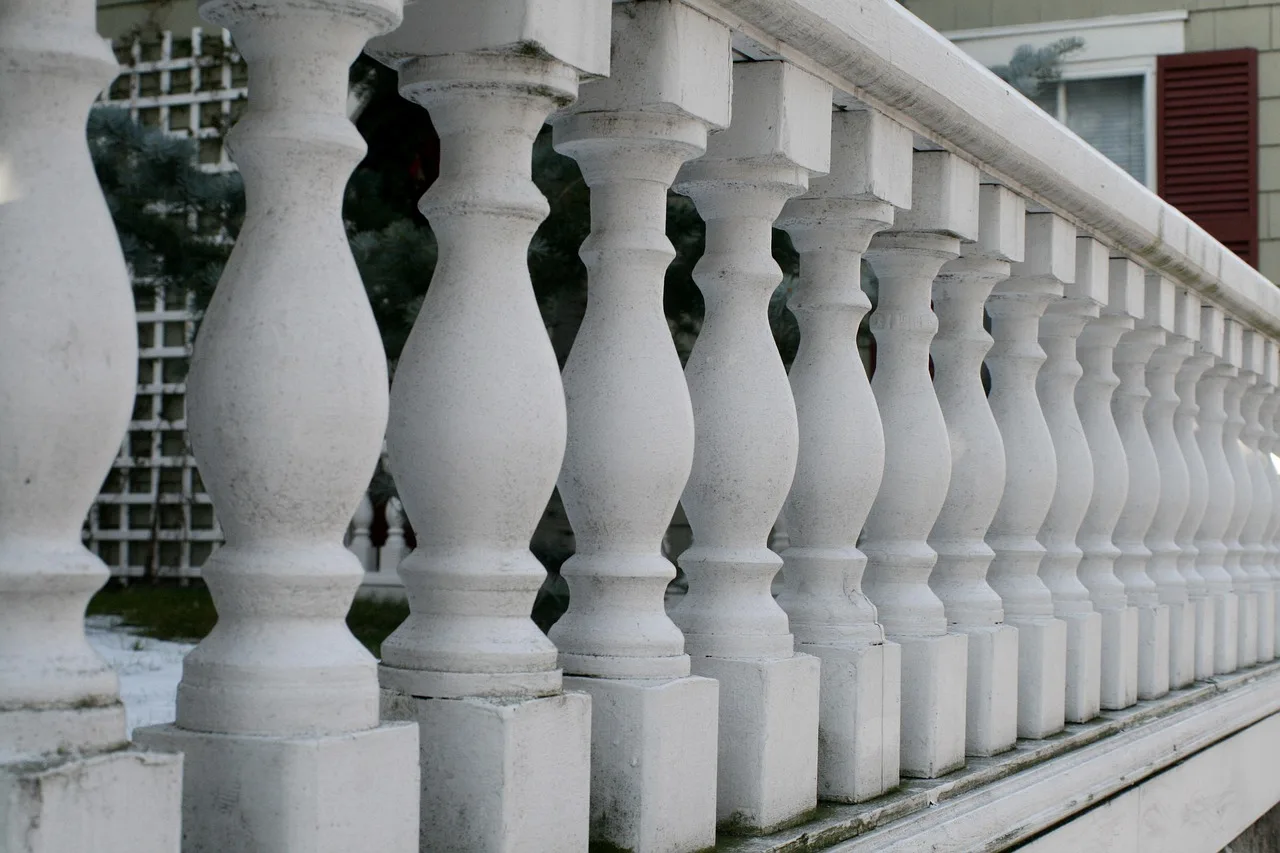
Rank 2: wobbling rails and loose balusters
Push the post at hip height. If the whole assembly flexes, the base is the problem, and bolts threaded into soft wood hold nothing.
If the base is sound and one baluster is loose, this is beginner work. Glue the joint with exterior-grade construction adhesive, then fix it with stainless steel or hot-dip galvanized screws and through bolts sized to the rail. Drywall screws and electroplated deck screws fail in treated wood within a few seasons.
Guard height and baluster spacing follow the local code. A loose rail on a raised porch is a fall hazard, so it outranks every cosmetic item here.
Rank 3: soft, spongy floor boards
Boards that give near the house usually sit over water rather than rot alone. Wood absorbs and releases moisture with the air around it, and a floor with no airflow beneath never dries.
Clear the skirting vents, pull soil back to leave a gap under the framing, and reset the slope away from the house. Then replace the boards, finishing all six faces and fastening with stainless or hot-dip galvanized screws. Pick the material before you cut, and the porch materials comparison sorts softwood, composite and vinyl by upkeep.
Rank 4: brown ceiling stains
A ceiling stain comes from above the ceiling plane. Check four candidates in order: roof-to-wall flashing, the gutter above it, an ice dam at the eave, a lifted shingle.
Timing is the tell. A stain that grows after each rain is active. One with a fixed edge has stopped for now, and repainting over an active leak buys a season at most.
Rank 5: paint that peels every couple of years
Peeling on horizontal boards, cut ends and the south face is moisture leaving the wood. Test it by taping a square of plastic sheet to the board for 24 hours. Condensation underneath means the wood is still wet.
Dry the wood to the level the coating maker specifies, sand loose paint back, and prime bare spots with an exterior oil or alkyd primer. Back-prime cut ends before they go in. Coat both faces of any replacement board.
Structural red flags
Three signals end the homeowner phase: a soft member in the load path, movement you cannot trace to a fastener, and anything needing a permit or an engineer's letter.
A licensed carpenter or structural engineer should see soft stringers, soft post bases, and any rim joist or ledger that has lost section. Ask what the quote covers before you compare prices, because the questions that separate a porch restorer from a board replacer matter more than the hourly rate.
Fuel stored on a covered porch
Cushions, a propane cylinder and a grill under a roof make a small fire into a large one. NFPA 101, the Life Safety Code, sets the open-flame and fire-safety rules that inspectors work from. Move propane off the porch between uses.