
Industry
Part of Covered patio systems compared: solid roofs, louvered covers and pergolas
5 covered patio lessons that keep showing up on real jobs
Five lessons that repeat on covered patio projects: ledger details, footings, loose objects, the appliance rule and the daylight nobody accounted.
Covered patios fail in a small number of ways, and four of the five have nothing to do with the roof panels people spend weeks choosing. These patterns show up often enough to treat as design rules.
What to take away
- The ledger connection to the house is the highest-consequence detail in the whole assembly.
- Footings decide whether the structure stays square, and frost depth is a local number.
- A covered patio collects loose objects, and loose objects are what wind turns into damage.
- A roof is not a storm shelter, and it never becomes one.
Lesson one: the ledger is the project
Where the cover meets the house, water gets in, and this detail is most often rushed. Use correct flashing, fasteners that go into structure rather than sheathing, and a sealant regime you inspect rather than assume.
Leaks here show up inside the wall months later, not on the patio. Photograph the flashing before the cladding goes back, and keep the photograph.
Lesson two: footings, not frames, keep it square
A frame that racks or a post that lifts usually traces back to a footing that was too shallow, too small, or poured in wet ground. Frost depth is set locally and is not negotiable.
Ask the building department, then ask the installer to confirm they are digging to it. This is also the item most quietly reduced when a quote is sharpened, which is worth remembering while setting the budget.
Lesson three: loose objects do the damage
Wind rarely destroys a well-built cover directly; it picks up what was left beneath it.
The National Weather Service publishes a survivor account from the 2020 derecho in Cedar Rapids. The household's forecast warned only of severe thunderstorms with gusts around 50 miles per hour, and the resident moved trash cans and plants to safer places before the storm arrived. The instinct was right; the warning understated what came.
Design for it. Give cushions, umbrellas and light furniture a place they can be secured in a few minutes, and adopt the habit before you need it.
Lesson four: a roof is not a shelter
A covered patio feels protective, which is exactly the problem. It is open-sided, and open-sided structures give no protection from lightning or severe wind.
FEMA's Ready campaign explains the different kinds of sheltering a household may need, from staying home to going to a designated shelter. None of them is a patio cover. When thunder is audible, everyone goes inside the house.
Lesson five: the appliance rule is absolute
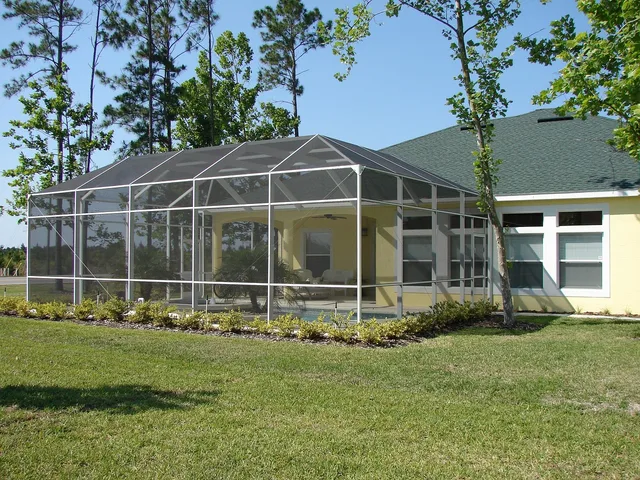
Every covered patio project eventually raises the same question: can the grill or the heater move under the roof, since it is raining? The answer is no. Grills, propane heaters, fire pits, chimineas and generators produce carbon monoxide, which is odorless and collects under a ceiling at seated height. Screened enclosures are worse, not better.
At design stage, plan a grill pad in the open air with manufacturer clearance measured.
Add electric infrared heating under the cover on a properly installed circuit, plus working carbon monoxide alarms in adjoining rooms of the house.
The keeping-it-working half sits in the first-year maintenance routine.